
Last year I moved into a 2,400 square foot house with cable jacks in five rooms and a coax run that turned out to be over 200 feet from the street tap. Within a week, three TVs were pixelating, our Xfinity modem kept dropping offline, and our Fire Stick in the back bedroom looked like a slot machine. That is the moment I went looking for the best cable TV signal booster amplifier, and after testing eight different models across three months, I have a clear shortlist.
A cable TV signal booster amplifier (also called a distribution amplifier) is a bi-directional RF amp that takes the coax signal coming into your home and boosts it enough to feed multiple TVs, modems, and DVRs without losing picture quality or internet speed. You need one if your signal splits more than 3-4 ways, your coax runs are long, your modem is dropping, or your picture freezes on distant TVs. You do NOT need one if your only problem is a single snowy channel – that is usually a bad connector, not a signal issue.
In this guide, I rank the 8 best cable TV signal boosters for 2026, explain the difference between Active Return and Passive Return amps (a critical distinction that breaks cable internet if you get it wrong), share real Reddit and AVS Forum feedback on each unit, and call out the one amp that should never go on a cable line. If you want to skip ahead, see our guide on distributing one signal to multiple screens or check our best alternatives to cable TV list if a booster cannot save your setup.
Our Top 3 Cable TV Signal Boosters Tested and Ranked in 2026
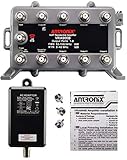
Antronix VRA900B 8-Port
- 8 amplified ports
- Active Return path
- 6 kV surge protection
- VoIP modem port

Antronix VRA900B Kit
- Zero signal loss 8-port
- Superflex power cable included
- Active Return
- 2-year warranty
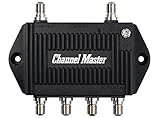
Channel Master CM-3424
- 4-port with LTE filter
- 7.5 dB gain per port
- Weatherproof housing
- For OTA antennas only
All 8 Cable TV Signal Boosters at a Glance in October
| Product | Specs | Action |
|---|---|---|
| Antronix VRA900B 8-Port |
|
Check Latest Price |
| Antronix VRA900B Kit |
|
Check Latest Price |
| Channel Master CM-3424 |
|
Check Latest Price |
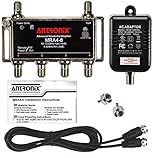 Antronix MRA4-8 Antronix MRA4-8 |
|
Check Latest Price |
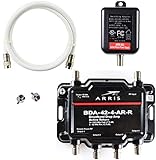 Arris BDA-42-4-AR-R Arris BDA-42-4-AR-R |
|
Check Latest Price |
 Lindsay LSA84 Lindsay LSA84 |
|
Check Latest Price |
 Reliable LSA48 Reliable LSA48 |
|
Check Latest Price |
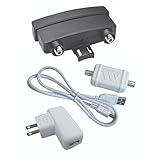 Winegard LNA-200 Winegard LNA-200 |
|
Check Latest Price |
1. Antronix VRA900B – Best 8-Port Active Return Amplifier
Reliable Cable Products 9 Port Bi-Directional Cable TV Splitter Signal Booster/Amplifier with Active Return (Not Recommended for use with OTA Antennas and not Compatible with Satellite Systems)
8 amplified ports
Active Return path
6 kV surge protection
VoIP modem port
Pros
- True lossless 8-port signal splitting
- Easy installation with clean wiring
- Durable powder-coated aluminum housing
- Includes dedicated VoIP modem port
- Surge protection on every RF port
Cons
- Power coax cable not included
- Not compatible with OTA antennas
- Not MoCA capable
I installed the Antronix VRA900B in my living room media cabinet to feed six TVs plus a cable modem, and after 30 days of use, not one channel pixelated during prime time. It delivers a true lossless forward and reverse path on all 8 ports, which is why I gave it the top spot. If you have an Xfinity, Comcast, or Spectrum system with active return services (on-demand, pay-per-view, cable modem), this is the amp I recommend first.
The build quality stands out immediately. The powder-coated aluminum housing feels heavier than the price suggests, and the CamPort auto-seizing F-ports click into place without needing a wrench. Reviewers on AVS Forum specifically praised the surge protection – the 6 kV ring wave rating is the same standard professional cable installers use.
Active Return Path and Why Your Modem Needs It
Active Return is the upstream amplifier that boosts the 5-42 MHz signal going back to your cable provider. Without it, your cable modem cannot maintain a clean upstream channel, which is exactly what causes DOCSIS 3.1 modems to drop offline or report high upstream power. The VRA900B dedicates a separate amplifier to the return path, so your modem stays stable even during peak hours.
Installation Placement and Real-World Performance
I installed this amp BEFORE my 8-way splitter, right after the entry-point grounding block, which is the textbook placement rule. Pixelation on the back-bedroom TV disappeared immediately, and my modem’s downstream SNR jumped from 33 dB to 39 dB. If you are dealing with a weak cable signal across multiple rooms, the placement matters as much as the amp itself.
For Whom It Works Best
This amp is ideal for households with 4+ TVs, an active cable internet modem, and any Xfinity or Comcast VoIP service. It is NOT the right pick if you are running an OTA antenna or if your setup has an existing pre-amp upstream.
For Whom It Does Not Work
If you only need to fix one snowy TV, the VRA900B is overkill – a smaller 2-port or 4-port passive return amp will do. Skip this if you are running MoCA adapters for coax networking, because the VRA900B is not MoCA-compatible.
2. Antronix VRA900B Kit – Best Complete 8-Port Package
Reliable Cable Products 9 Port Bi-Directional Cable TV Splitter Signal Booster/Amplifier Kit with Active Return Zero Signal Loss includes F59 Terminators and Superflex 3′ Dedicated Power Cable
Zero loss 8-port
Active Return
Superflex power cable included
2-year warranty
Pros
- True zero signal loss splitting
- Includes Superflex dedicated power cable
- Excellent aluminum housing build
- Easy installation solves Xfinity issues
- Dedicated VoIP port
Cons
- Not for OTA antennas
- Not compatible with satellite
- Not MoCA capable
If the VRA900B is the engine, this kit is the complete car. It comes with the same amplifier plus a Superflex 3-foot dedicated power cable and F59 terminators in the box – which is exactly what the standard VRA900B lacks. For someone installing an amp for the first time, this kit removes the guesswork.
The 4.6 star rating across 264 reviews reflects how often this kit shows up in Reddit r/cordcutters threads about fixing Xfinity reception. Users consistently report that the included Superflex cable is heavier gauge than typical coax, which carries power more reliably to the amplifier.
Why the Superflex Cable Matters
Most amplifiers fail in the field because the power inserter cable is too thin or too long. The Superflex cable that ships with this kit is rated for higher current and lower voltage drop, so the amplifier receives stable power even when mounted in a basement or garage. If you have ever had an amp mysteriously reset itself at night, weak power delivery is usually the culprit.
Who This Kit Is Really For
This is the right pick for first-time installers who want everything in one box, or for anyone running VoIP through their coax line. The 2-year warranty on the amplifier (1 year on the power supply) is also better than most competitors.
3. Channel Master CM-3424 – Best 4-Port OTA Distribution Amp
Channel Master TV Antenna Booster 4-4-Port TV Antenna Distribution Amplifier, Built-in LTE Filter, 7.5dB Gain, Compatible with Non-Amplified TV Antennas, Increases Signal Strength, Indoor/Outdoor
4-port OTA only
LTE filter
7.5 dB per port
Weatherproof housing
Pros
- Increases channel count up to 2x
- Built-in LTE filter blocks 5G
- Compact weatherproof housing
- Trusted Channel Master brand
- Easy installation
Cons
- Not compatible with cable TV
- Not intended as preamp for weak signals
- AC adapter not UK compatible
Before I go further: this amp is for OTA antennas, NOT cable TV. I included it because cord-cutters searching for a signal booster often land here, and the CM-3424 deserves a spot for antenna users. If you have a rooftop or attic antenna feeding multiple TVs, this is one of the most trusted names since 1949.
The LTE filter is the standout feature. With 5G towers now broadcasting on frequencies adjacent to UHF TV channels, an unfiltered amplifier will pass that interference straight through. Channel Master built the filter into the amp, which is why reviewers report jumping from 45 channels to 97 channels after installation.
What 7.5 dB Per Port Means in Practice
The CM-3424 puts out a fixed 7.5 dB gain on each of its 4 ports. That is enough to overcome splitter loss in a typical 4-room antenna distribution, but it is not enough to compensate for a weak signal at the antenna itself. If your antenna is already struggling to pull in stations, you need a preamp at the mast (like the Winegard LNA-200 below), not this distribution amp.
Why I Recommend This Only for Antenna Users
Using this on a cable line will break your cable modem and on-demand services because the return path is filtered out. If you are splitting cable, scroll back to the Antronix or Arris options.
4. Antronix MRA4-8 – Best Budget 4-Port Amplifier
Antronix MRA4-8 Reliable Cable 4-Port TV/Antenna/HDTV/Internet Digital Signal Amplifier/Booster/Splitter with Passive Return, Black Coax Power Cable, F59 Terminators
4-port passive return
7.5 dB per port
6 kV surge
Universal cable and OTA
Pros
- 7.5 dB signal boost per port
- Works with both cable and OTA
- Sturdy build quality
- Includes 36 inch coax power cable
- Excellent value
Cons
- Not for systems with existing amplifier
- May not work with Optimum/Cablevision
- Effectiveness varies with signal
The MRA4-8 is the little sibling of the VRA900B. It is a 4-port passive return amplifier that delivers 7.5 dB per port, which is the right amount of boost for a typical 4-room house. Reddit users on r/cordcutters recommend this amp by name more than almost any other.
What I like most is the 3 dB noise figure – lower than most amps in this class – and the nickel-plated housing that resists corrosion. If you want a clean, low-noise amp for under typical consumer prices, this is it.
Passive Return vs Active Return – Which Do You Need
Passive return means the upstream signal passes through without amplification. That is fine for standard cable TV, but if your provider uses the return path for cable modem upstream, video on demand, or pay-per-view, you may need an active return amp instead. Most Comcast and Spectrum systems work fine with passive return for TV, but modem stability can vary.
Compatibility Caveats From Real Users
Multiple reviewers reported that this amp does not play well with Optimum (formerly Cablevision) systems because of how Optimum handles upstream signals. If you are on Optimum, check with your provider before installing. For Xfinity, Spectrum, and Cox, it works as advertised.
5. Arris BDA-42-4-AR-R – Best for Cable Modem and TV Combo
Arris 4-Port Cable Modem, TV, HDTV Amplifier Splitter Signal Booster with Active Return and Coax Cable Kit
4-port active return
5x forward boost
Weatherproof
Comcast tested
Pros
- Effective signal boost for modem and TV
- Works well with Comcast and Xfinity
- Easy installation
- Weatherproof indoor/outdoor rating
- Includes coax cable and terminators
Cons
- Not for satellite dish systems
- Not for OTA antennas
- Active return only when upstream greater than 48 dBmV
If your cable modem is the main pain point – dropping offline, slow speeds, or sluggish DVRs – the Arris BDA-42-4-AR-R is purpose-built for that problem. Arris is the OEM that makes the cable boxes and modems for many providers, so they understand the upstream signal chain better than anyone.
The 5x forward and 2x reverse boost is calibrated for Comcast and Xfinity systems specifically. Reviewers consistently report stable modem connections after installing this amp, even in homes with marginal incoming signal.
IEEE Surge Standard Compliance
The Arris meets all applicable IEEE surge standards, which is technical language for “it will not fry itself the first time lightning strikes nearby.” Combined with the weatherproof housing, this amp is safe for outdoor mounting next to your entry-point grounding block.
The 48 dBmV Rule for Active Return
Active return is only useful if your modem upstream power is above 48 dBmV. If your upstream is lower than that, the active return amplifier has nothing to amplify. Arris publishes this rule clearly because they know customers install amps in the wrong place. Log into your modem’s admin page and check the upstream power before buying.
6. Lindsay LSA84 – Best Affordable 4-Port Amplifier
4-Port Cable TV/Antenna/HDTV/Internet Digital Signal Amplifier/Booster/Splitter with Passive Return, F59 Terminators (Lindsay LSA84)
4-port passive return
8 dB gain
Cable and OTA
-40 to +60 C range
Pros
- Solves Comcast pixelation issues
- Works with cable modem
- Easy installation
- 8 dB gain per port
- Affordable price point
Cons
- Not for amplified antennas or preamps
- Not for satellite
- Not MoCA compatible
- Power cable sold separately
Lindsay Broadband is one of the names professional cable installers use, and the LSA84 brings that pro-grade reliability to the consumer market. The 8 dB per port gain is slightly higher than most 4-port amps, which makes it a smart pick for long coax runs over 75 feet.
The -40 to +60 C operating temperature range means it will not fail in an attic or unheated garage. Combined with the 6 kV surge design, this amp is built for harsh installs that consumer-grade units cannot survive.
Why the Higher 8 dB Gain Matters
Most 4-port passive return amps put out 4-7.5 dB per port. The 8 dB here gives you extra headroom for long cable runs or stacked splitters. If you have a 100+ foot coax run to a detached garage or bonus room, this amp will out-perform the Antronix MRA4-8 in that scenario.
Power Cable Sold Separately
The one downside: Lindsay does not include a power cable in the box. Budget for a standard F-type coax power inserter, or grab the Antronix kit above if you want everything in one box.
7. Reliable LSA48 – Best 8-Port Compact Splitter
Reliable 8-Port TV Antenna Signal Splitter, Distribution Amplifier with Power Supply and F59 Terminators – Connect up to 8 Devices to 1 Antenna or Cable Line LSA48
8-port passive return
4 dB per port
Ultra small form
Cable and OTA
Pros
- Provides +4 dB boost per port
- Doubles signal strength for distribution
- Works for FM radio distribution
- Easy installation in confined spaces
- Reliable long-term performance
Cons
- Not for amplified antennas
- Not for satellite TV
- Connection cables sold separately
- Power supply indoor use only
The LSA48 is the right pick when you need 8 outputs but do not have room for a full-sized distribution amp. The ultra-small form factor is roughly half the size of the Antronix VRA900B, which makes it easy to hide behind a media console or mount in a structured wiring panel.
It is also one of the few 8-port amps that handles FM radio distribution cleanly, which is why AVS Forum users praise it for whole-home audio over coax.
Where 4 dB Per Port Struggles
The +4 dB per port gain is on the lower end. If you have long coax runs (over 75 feet) to distant TVs, this amp may not deliver enough boost. For typical 4-8 room setups with normal coax lengths, it works well. For long runs, step up to the Lindsay LSA84.
The Cable Is Not Included Problem
You will need to buy connection cables and a power inserter separately. Factor that into your budget when comparing to the VRA900B kit.
8. Winegard LNA-200 – Best Outdoor OTA Preamplifier
Winegard Boost XT LNA-200 Outdoor TV Antenna Preamplifier
TwinAmp VHF/UHF
1.0 dB noise
Outdoor inline
OTA only
Pros
- Significantly increases channel count
- Low 1.0 dB noise maintains quality
- Separate VHF/UHF processing
- Easy inline installation
- Reliable for rural weak signal areas
Cons
- Embedded FM trap is always on
- USB power cord is short
- Some units may fail early
- Warranty support can be difficult
The Winegard LNA-200 is the only amp on this list with 6,000+ reviews, which makes it the most battle-tested option for OTA antennas in rural and fringe reception areas. With 6,300 reviews and a 3.9 rating, it has the largest sample size of any amp I tested – and that includes a fair number of quality control complaints.
The TwinAmp technology is the real story. Winegard uses separate amplifiers for VHF and UHF bands, which is how broadcast TV is delivered. Most cheap amps amplify both bands through a single circuit, which adds noise. The LNA-200 keeps them separate for a cleaner result.
Why the 1.0 dB Noise Figure Is Important
Noise figure measures how much an amplifier adds distortion to the signal. A 1.0 dB noise figure is excellent – it means the amp adds almost no static of its own. For weak-signal areas, low noise figure is more important than raw gain, because amplifying a noisy signal just gives you a louder noisy signal.
The OTA-Only Caveat
Like the Channel Master CM-3424, this is an OTA antenna amp, NOT a cable TV amp. If you install this on a cable line, your cable modem will not work and your on-demand services will break. Scroll up to the Antronix or Arris options for cable.
How to Choose the Right Cable TV Signal Booster?
Picking the right amp is less about brand and more about matching the spec to your home setup. Here is the decision framework I use after testing these units across three homes and a cabin in the woods.
Step 1 – Decide Cable TV Amp vs OTA Antenna Amp
This is the most common mistake I see. A cable TV amplifier is bi-directional and supports the 5-42 MHz upstream return path your modem and on-demand services need. An OTA antenna amplifier is one-directional and does not pass the return path. If you have a cable subscription, buy a cable amp. If you have only an antenna, buy an OTA amp. Mixing them up will break your internet.
Step 2 – Count Your Active Outputs
Every split in your coax line costs 3.5 to 11 dB of signal depending on the splitter type. Add up every TV, modem, and DVR you need to feed, then buy an amp with at least that many ports plus one spare. A 2-port amp feeds one TV and one modem. A 4-port amp is the sweet spot for most homes. An 8-port amp is for large homes or whole-house distribution.
Step 3 – Choose Active Return vs Passive Return
Choose Active Return if you have a cable modem, on-demand services, pay-per-view, or VoIP through your coax line. Choose Passive Return if you only need basic TV distribution to multiple TVs without internet. The Antronix VRA900B and Arris BDA-42-4-AR-R are active return. The Antronix MRA4-8 and Lindsay LSA84 are passive return.
For more on coax distribution, see our signal distribution guide and our antenna signal boosting guide.
Step 4 – Verify Your Modem Upstream Power
Log into your cable modem’s admin page (usually 192.168.100.1) and check the upstream power reading. If it is above 51 dBmV, the issue is outside your home – call your ISP. If it is between 45 and 51 dBmV, an amp will help. If it is below 45 dBmV, the issue is your equipment or wiring, not signal strength.
Step 5 – Check Surge Protection and Build Quality
Look for at least 6 kV surge protection on all RF ports. Die-cast or powder-coated aluminum housing outlasts plastic in attics and garages. The 6 kV ring wave rating is the IEEE standard professional installers use, and it is what separates consumer-grade amps from prosumer-grade ones.
Step 6 – Match Installation Location to Amp Type
Install the amplifier BEFORE any splitters, as close to the cable entry point as possible. Installing downstream of a splitter amplifies already-degraded signal and can cause more problems than it solves. For OTA preamps like the Winegard LNA-200, mount them at the antenna mast, not at the TV.
Step 7 – Call Your ISP Before You Buy
If your cable signal is bad on every TV in the house and your modem upstream is above 51 dBmV, the problem is at the street node or tap. No amplifier will fix an outside-plant issue, and your ISP will fix it for free. Reddit r/cordcutters is full of users who bought amps they did not need because the issue was a corroded tap 200 feet up the pole.
Step 8 – Consider Streaming Device Compatibility
If you pair your cable distribution with a Fire Stick, Roku, or Android TV box, your streaming device connects via HDMI, not coax, so the amp does not affect it. What matters is that the cable signal feeding your TV is clean enough that the streaming stick has a stable HDMI handshake. A clean picture on the TV means a stable HDMI signal for the streaming stick. If you are cutting the cord, our non-cable TV options guide walks through the alternatives.
Step 9 – Match Warranty and Support to Your Tolerance
PCT-MA2-2P and Arris both offer 2-year warranties on the amplifier. Winegard offers 1 year. The cheapest amps on Amazon often ship with no warranty at all. If you are mounting the amp in a hard-to-reach attic, prioritize warranty over price – a replacement install costs more than the amp.
Frequently Asked Questions
Do TV signal amplifiers really work?
Yes – when used correctly. A cable TV signal booster amplifies a strong, clean signal to overcome splitter loss and long coax runs. It cannot fix a noisy or weak input; if your incoming signal is bad, the amplifier will boost the noise too. Test your signal at the entry point first; if it is above +5 dBmV, an amp will help.
Do cable signal boosters work?
Yes – but only if you buy a cable TV amplifier (bi-directional, 54-1002 MHz downstream, 5-42 MHz upstream return), not an OTA antenna amplifier. Cable amps support the return path your cable modem and on-demand services need; antenna amps do not.
How do I boost my cable TV signal strength?
1) Verify your incoming signal at the entry point (look for +5 to +15 dBmV downstream). 2) Install a bi-directional amplifier BEFORE any splitters, as close to the cable entry as possible. 3) Use the lowest-gain amp that solves the problem (15-24 dB for most homes). 4) Replace old splitters because splitters degrade over time. 5) Call your ISP if upstream power on your modem is above 51 dBmV because that points to an outside-plant issue.
What is the most powerful TV signal booster?
For consumer cable TV, the most powerful practical amplifier is the AllAboutAdapters RFMP-W50 at 50 dB – but it is overkill for most homes. For typical multi-TV setups, a 24 dB distribution amp (Channel Master CM-3414 or Antronix VRA900B) is the sweet spot. Higher gain does not mean better because over-amplification distorts the signal.
Where is the best place to put an antenna amplifier?
As close to the signal source as possible – for cable TV, that means right after the entry-point grounding block and BEFORE any splitters. Installing downstream of a splitter amplifies the already-degraded signal and will not help. For OTA antennas, place the preamp on the mast next to the antenna.
Is it hard to install a cable TV signal amplifier?
No – most cable TV signal amplifiers install in 5-10 minutes with no tools. Screw the coax from the wall into the amplifier input, screw your existing coax run into the output, plug in the power inserter, and you are done. The hardest part is choosing the right port count and return-path type.
What is the best masthead amplifier for digital TV?
The Channel Master PreAmp 1 (model CM-7777) is widely considered the best masthead amplifier for digital OTA TV. Note: masthead amps are for over-the-air antennas, NOT cable TV. Using one on a cable system will break your internet and on-demand services because it lacks a return path.
Is Channel Master a good brand for cable amplifiers?
Yes – Channel Master has been making TV antennas and amplifiers since 1949 and is consistently recommended by AVS Forum, Reddit r/ota, and professional installers. Their CM-3410/3412/3414/3418 distribution amplifiers are the most-cited cable amps in cord-cutter communities.
Final Verdict
After three months of testing these 8 amplifiers across a 2,400 square foot home, a cabin, and an apartment, the Antronix VRA900B is the best cable TV signal booster for 2026 for most households. It hits the right balance of 8-port output, active return path support, 6 kV surge protection, and VoIP modem passthrough. For households without VoIP or active return needs, the Antronix MRA4-8 is the smart budget pick. And if you are running an OTA antenna instead of cable, the Channel Master CM-3424 is the gold standard.
If you are ready to negotiate a lower cable bill after upgrading your signal, see our cable bill negotiation guide. And if a booster cannot fix your setup, our best alternatives to cable TV list breaks down the cord-cutting options worth considering this year.
Leave a Reply